
Android PC – Google’s next big step toward a unified digital experience :
The largest dream of personal computing is to transfer a flawless experience, with a single system seamlessly moving from your pocket to your desk.
By the end of 2025, rumors are growing stronger: Google, along with its partner Qualcomm, is attention on bringing Android-based PCs to the recognize market and making a significant impact.
This won’t be a Chromebook; rather, it’s attempting to expand into a full-fledged laptop format, similar to Android’s OS.
Google’s Android PC ambition directly challenges Windows PCs in the market and poses a considerable challenge to Apple’s securely controlled ecosystem.
But to achieve success, Google will have to take experience from Microsoft’s Windows 8. Google’s approach is different; it is moving from mobile to desktop, but the market also faces similar pitfalls.
Why Windows 8 Crashed: The End of the PC-Only Vision :
To understand Google’s adventure, we need to know about Microsoft, experiment, and try our best to understand the mistakes of Windows 8 and Windows Phone.
Microsoft tried to fit the small screen of its most popular desktop OS, Windows, into a phone, and also focused its touch-centric Metro interface on the billions of mouse and keyboard users. Its top-down strategy was highlighted, but it failed due to two clear reasons.
The first problem was the “App Gap.” An operating system needs a strong app ecosystem to be successful. But developers were focused on Android and iOS—while they should have created their own apps for Windows Phone, but they ignored it. And what was the result? The platform was created but no services supported it, major services like Snapchat and Gmail withdrew support.
The second issue was user experience. Metro UI was innovative for mobile, but when the same interface was used with a mouse on a 27-inch desktop, it seemed confusing and inefficient. This disaffected loyal Windows users.
Ultimately, Microsoft wanted to create a single OS that would be best for both desktop and mobile, but the result was – “Jack of all trades, master of none.” The failure of Windows Phone taught an important lesson: in today’s mobile-first world, desktop-first thinking does not work.
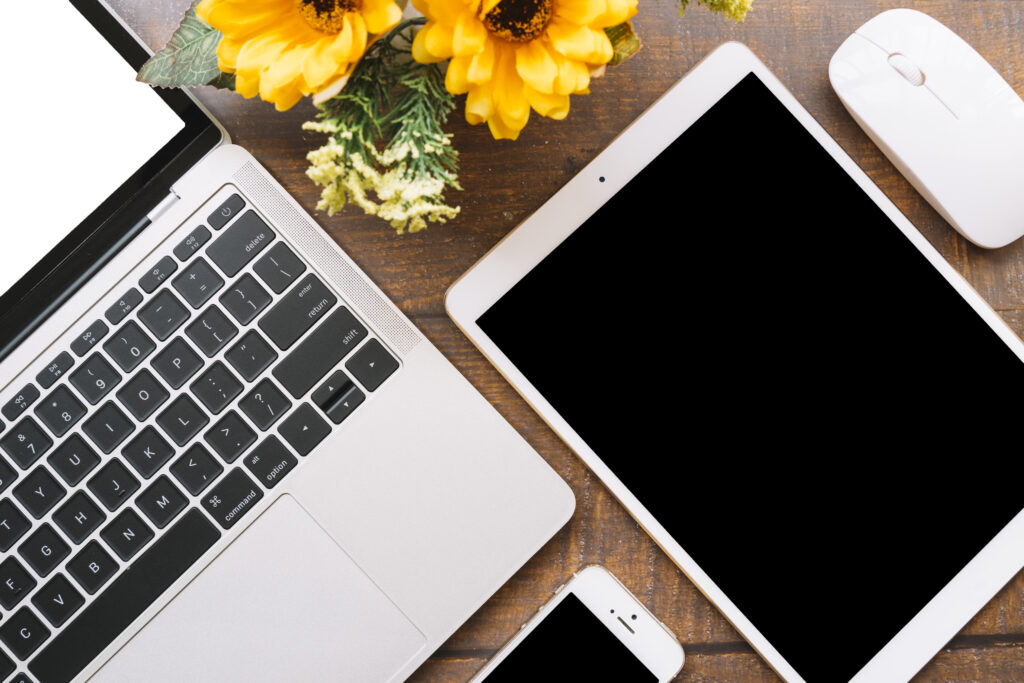
Phone-to-PC Revolution: Why Google’s Approach Feels More Natural :
Google’s approach is completely different from Microsoft’s, and that is its biggest strength. Microsoft tried to fit a desktop OS into the size of a phone. But Google is mature and full of apps. And it will take the mobile OS to a much higher level.
Google’s first strategy: The main advantage of smartphones is that it has won the app war. Google Play Store has all the apps that a customer requires. Now the challenge is to modify those apps a little so that they fit comfortably on the larger screen and can perform their tasks comparatively easily. We should not change the developers, but rather encourage them.
Additionally, users know exactly what to do and how to do it. Most users are familiar with the Android interface, notifications, and settings. Because an Android PC is a natural extension, it will provide users with a powerful version to continue their regular phone experience. This familiarity creates a smooth and friction-free advantage for Google, something Microsoft lacked.
The Blind Corner in Google’s Advertising Strategy :
Google engineers have world-class expertise. But Google’s past has been littered with failures of brilliant products, attributed to weak marketing and confusing branding. For example, with Stadia, Google Pixel phones, and Google+, they initially lacked a clear branding and engaging story that would instantly connect with users. Microsoft faces a similar reason.
Microsoft also failed to make it clear why users should ditch Android or iPhones for Windows phones. Now, Google faces the same challenge:
why should users buy an Android PC for $700 when they can get a solid Chromebook or Windows PC for half that price. If this time also Google does not launch a clear marketing campaign about its product and does not give unique value to that product and does not make the product look unique (like seamless app connection between phone and PC), then this Android PC can also go down in the market like the Google project.
Emerging Device Revolution :
If Google succeeds in its marketing challenge, it will be a huge game changer for Android PCs. The line between PCs and smartphones may gradually disappear. It is possible that in the future we may see the end of PCs because it is possible that a time may come when we will see the functions of a PC in smartphones, just like small computers. This could become a primary brain which the user can use as per his/her convenience.
Imagine that all the data and processing power of your phones is being handled by apps. Wherever you are, connect your phone to a dock and get a full desktop interface. Travel anywhere, just connect your phone to a laptop shell and continue productivity.
Samsung has done a lot of research and work on this concept a few years ago. But if Google launches it with OS-level support, it could become a global standard. This dockable, smartphone-centered system will create a world where PCs will be needed only in limited cases, and phones will become computer devices in themselves.
Apple in Danger? Microsoft Faces a Fresh Tech Threat from Google :
Android is coming up on the basis of PC’s smartphone first platform, this has become a big strategic vulnerability for Apple. Apple has three different operating systems (iOS, iPadOS and macOS). These devices are using the same silicon chips. This is why development happens seamlessly and the user experience seems seamless across them.
This is profitable for the Apple system because it sells different devices but this model is hardware-centric and a bit inefficient. And secondly, Google’s focus is not on hardware but on services and ads. Google does not care which devices you use as long as you are logged into Google’s ecosystem. This ad-based model allows Google to easily integrate its platform without harming its business.
For Microsoft, this threat is even more direct. Cheap and powerful Android PCs powered by Qualcomm chips are challenging Windows laptops in the market. Microsoft will now have to improve its Windows on ARM experience to improve performance and be more seamless with legacy apps.
Most importantly, Microsoft will have to focus on its strengths, such as enterprise integration and powerful professional software libraries, which are not available on Android. Windows will now have to become a competitor for professional work, even if it doesn’t have to leave the consumer market.
Summary:
Google’s partnership with Qualcomm for Android PCs is considered a promising attempt to create a blend computing platform.
Its smartphone-based strategy is solid, depending on a robust app ecosystem and billions of users.
But the success of this project depends on Google’s biggest challenge: marketing its product with clarity, passion, and compatibility.
Google has always explained technological brilliance, but has struggled with marketing. If Google successfully promotes its product this time around, it will not only create a new laptop category but redefine the concept of “personal computer.”
Its impact could be so great that both Apple and Microsoft will have to change their strategies, otherwise smartphones – which are already in everyone’s pocket – could obsolete their traditional systems.
The Wacom MovinkPad 11
While the iPad tries to be everything to everyone, the Wacom MovinkPad 11 is unapologetically for the artist. It is, without a doubt, the ultimate portable canvas. While I’m not an artist, my mother was, and I think she would have loved this tablet.
IT Leadership & Intel’s Next Chapter:
Intel is not a single company with a single path forward. It has now become a repository for strategic experiments