
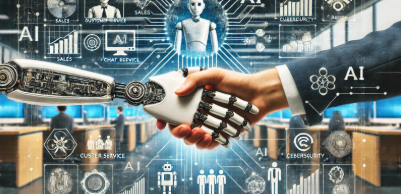
How Businesses Can Prepare for an AI-First Future: Strategy Guide for Companies in 2026 and Beyond
How Businesses Can Prepare for an AI-First Future
Artificial Intelligence is no longer an emerging technology. It is quickly becoming the foundation of modern digital infrastructure. From automated customer service to predictive analytics and intelligent decision-making, AI is reshaping how organizations operate.
Many technology leaders believe that the coming decade will be defined by AI-first businesses—companies that build their operations, products, and strategies around artificial intelligence capabilities.
For organizations that want to stay competitive, preparing for an AI-first future is not optional. It is a strategic necessity.
This comprehensive guide explains how businesses can prepare for the AI era, including practical steps for leadership teams, technology departments, and operational managers.
What Does “AI-First” Mean?
An AI-first business prioritizes artificial intelligence as a core part of its strategy, rather than treating it as an optional tool.
In traditional organizations, technology supports existing workflows. In AI-first companies, artificial intelligence becomes the foundation of how work is done.
For example:
Traditional approach:
Humans perform tasks and software assists them.
AI-first approach:
AI systems perform most operational tasks while humans supervise and manage strategic decisions.
Technology companies such as Google and Microsoft have openly stated their commitment to AI-first strategies.
Why Businesses Must Prepare for an AI-First Future
Several global trends are accelerating the shift toward AI-driven organizations.
Rapid Data Growth
Companies generate massive volumes of data every day. AI systems can analyze this data much faster than humans.
Automation Demands
Organizations seek ways to reduce repetitive work and improve operational efficiency.
Competitive Pressure
Companies adopting AI technologies gain productivity advantages over competitors.
Customer Expectations
Modern customers expect faster responses, personalized experiences, and intelligent digital services.
These factors make AI adoption a strategic priority.
The Key Pillars of an AI-First Business Strategy
Preparing for an AI-first future requires transformation across several areas.
1. Leadership and Vision
AI transformation begins with leadership commitment.
Executives must understand:
The strategic potential of AI
The risks and ethical considerations
The organizational changes required
Many successful AI initiatives fail when leadership treats AI as just another IT project rather than a strategic transformation.
Organizations such as OpenAI highlight the importance of leadership awareness in responsible AI adoption.
2. Data Infrastructure
AI systems depend on high-quality data.
Businesses must invest in:
Data collection systems
Data storage infrastructure
Data governance policies
Data security frameworks
Without reliable data, AI systems cannot produce meaningful insights.
3. Workforce Transformation
One of the biggest challenges in AI adoption is workforce adaptation.
Companies should focus on:
AI literacy training
Digital skill development
Reskilling employees
Creating new AI-related roles
Employees who understand AI tools can significantly increase productivity.
4. Automation of Business Processes
AI-first organizations automate routine tasks wherever possible.
Examples include:
Customer service automation
Marketing campaign optimization
Inventory management
Financial forecasting
Automation frees employees to focus on higher-value strategic work.
Practical Steps to Prepare for an AI-First Future
Organizations can begin preparing for AI transformation with a structured approach.
Step 1: Conduct an AI Readiness Assessment
Businesses should evaluate their current capabilities, including:
Data infrastructure
Technology stack
Workforce skills
AI knowledge among leadership
This assessment helps identify gaps and opportunities.
Step 2: Identify High-Impact Use Cases
Not every process requires AI.
Companies should focus on areas where AI can deliver measurable value, such as:
Customer support automation
Sales forecasting
Fraud detection
Personalized marketing
Starting with small but impactful projects reduces risk.
Step 3: Build an AI Strategy Roadmap
A long-term roadmap ensures structured AI adoption.
The roadmap should include:
Short-term pilot projects
Mid-term automation initiatives
Long-term AI transformation goals
Clear planning helps organizations avoid fragmented AI implementation.
Step 4: Invest in AI Technology Platforms
Modern AI tools and cloud platforms simplify adoption.
Technology providers such as Amazon and IBM offer AI platforms that enable businesses to integrate machine learning, automation, and analytics into their operations.
Step 5: Establish AI Governance
Responsible AI adoption requires governance frameworks.
Organizations must ensure:
Ethical AI usage
Data privacy protection
Algorithm transparency
Risk management procedures
Governance frameworks help maintain trust and regulatory compliance.
AI Use Cases Across Business Functions
AI transformation impacts multiple departments within organizations.
Marketing
AI enables marketers to analyze customer behavior and personalize campaigns.
Key applications include:
Predictive marketing analytics
Automated content generation
Customer segmentation
Sales
AI tools can analyze leads and predict purchase behavior.
Examples:
Sales forecasting
Lead scoring
Automated outreach systems
Customer Support
AI-powered chatbots and virtual assistants handle routine inquiries.
Benefits include:
24/7 customer support
Faster response times
Reduced support costs
Operations
Operational AI tools improve efficiency in logistics, manufacturing, and supply chain management.
Applications include:
Demand forecasting
Inventory optimization
Process automation
The Role of AI Agents in Future Businesses
AI agents are becoming a key component of AI-first organizations.
These intelligent systems can:
Analyze data
Make decisions
Execute tasks autonomously
Businesses increasingly deploy AI agents to manage workflows and improve productivity.
Challenges Businesses May Face
Despite its benefits, AI adoption presents several challenges.
Skill Shortages
Many companies struggle to find employees with AI expertise.
Integration Complexity
Integrating AI systems with existing infrastructure can be technically complex.
Ethical Concerns
Organizations must ensure responsible AI use and prevent bias.
Cost of Implementation
Initial investment in AI technology and infrastructure can be significant.
However, long-term productivity gains often justify the investment.
AI-First Companies vs Traditional Companies
| Feature | Traditional Business | AI-First Business |
|---|---|---|
| Decision-making | Human-driven | Data-driven |
| Operations | Manual processes | Automated workflows |
| Customer interaction | Human support | AI + human collaboration |
| Data usage | Limited analysis | Advanced analytics |
AI-first companies are better equipped to scale rapidly and adapt to changing market conditions.
Building an AI-Ready Culture
Technology alone does not create an AI-first organization. Culture plays a critical role.
Businesses must encourage:
Innovation
Experimentation
Continuous learning
Leaders should also promote collaboration between technical teams and business departments.
The Future Workplace: Humans and AI Working Together
Rather than replacing workers entirely, AI will reshape job roles.
Employees will increasingly collaborate with AI systems to:
Analyze complex data
Automates routine tasks
Improve strategic decision-making
This partnership between humans and AI will define the modern workplace.
Long-Term Benefits of AI-First Strategies
Companies that successfully adopt AI can experience significant advantages.
Increased Productivity
Automation reduces manual work and increases efficiency.
Better Decision-Making
AI analytics provide deeper insights into business operations.
Improved Customer Experience
Personalized services enhance customer satisfaction.
Competitive Advantage
Early AI adopters often outperform competitors in innovation and scalability.
What does AI-first mean for businesses?
AI-first businesses prioritize artificial intelligence as a central component of their operations, using AI systems to automate tasks and support decision-making.
Why should companies prepare for an AI-first future?
Organizations that adopt AI technologies early can improve productivity, reduce costs, and gain competitive advantages in rapidly evolving markets.
How can small businesses adopt AI?
Small businesses can start with simple AI tools such as chatbots, marketing automation platforms, and data analytics software.
Will AI replace employees?
AI is more likely to augment human work rather than completely replace it, enabling employees to focus on higher-value tasks.
Conclusion
Artificial Intelligence is reshaping the global business landscape. Companies that fail to prepare for an AI-first future risk falling behind competitors who leverage automation, data analytics, and intelligent systems.
Preparing for this transformation requires strategic planning, workforce training, strong data infrastructure, and responsible AI governance.
Organizations that embrace AI as a core component of their strategy will be better positioned to innovate, scale operations, and meet the evolving expectations of customers.
The AI-first era has already begun. Businesses that start preparing today will lead tomorrow’s digital economy.

Best Ethics of AI
Artificial Intelligence is transforming industries, governments, and everyday life. From recommendation systems to automated decision