

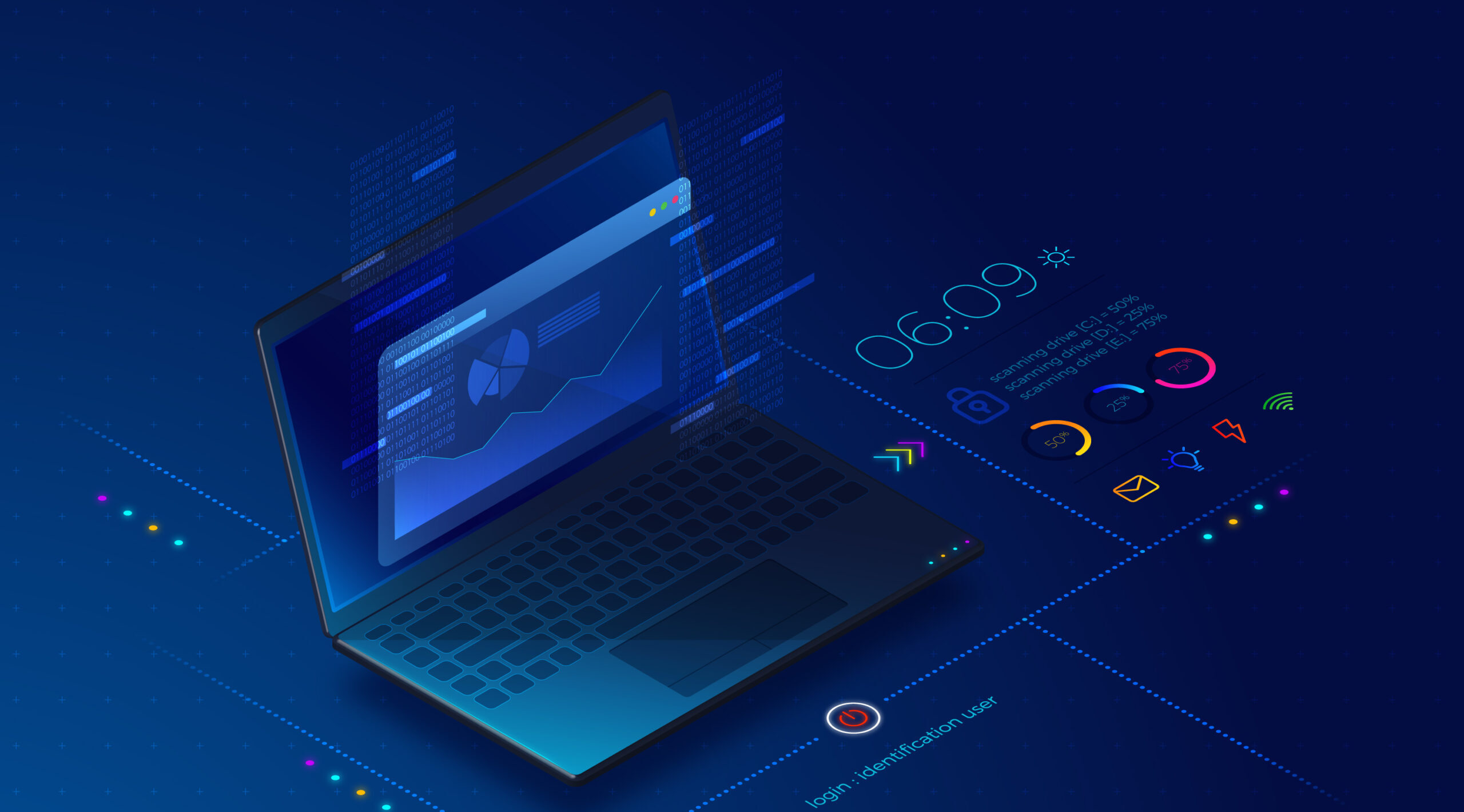
Lenovo Expands ‘Smarter AI for All’ to Bridge AI Innovation From Smartphones to Cloud Computing:
Lenovo’s headquarters released an update on new products, services, and AI advancements last week. There are significant differences between Lenovo and Dell—both have diametrically opposed execution and messaging approaches.
Lenovo is unifying its entire strategy into a single vision, not fragmentation—”Smarter AI for All.” This vision was highlighted again at the annual Tech World event. This concept is based on a “Hybrid AI Model”—where AI will run in two places:
- On the device for speed, privacy, and personalization;
- On the cloud for power and knowledge.
The real masterstroke of this strategy is what both AI models, “Personal AI Twin” and “Enterprise AI Twin,” represent: understanding our workflow and habits and proactively helping us. This isn’t limited to just laptops, but connects to the entire Lenovo ecosystem, which is a very important thread for Dell.
Lenovo also has the advantage of having a brand like Motorola, which Dell doesn’t have. Lenovo’s AI Twin starts its day on your Motorola phone, then seamlessly transitions to Yoga laptops and ThinkPads, and is also backed in the cloud by Lenovo’s ThinkSystem servers.
Dell does have an AI PC, but it’s more of an island—it’ll be reduced to a hardware vendor for Microsoft’s Copilot. Lenovo is building its own AI platform—a smart, connected ecosystem that works across multiple devices.
Lenovo’s multi-device advantage and global presence make it a leader in both the consumer and enterprise AI markets. And its approach appears more credible, powerful, and future-ready than Dell’s.
Finally, the author shared its Product of the Week—Plaud Notepin, an affordable AI gadget for those who don’t like to manually write notes.
Bridging the Trust Deficit: Authentic AI Adoption vs. Empty Promises:
In today’s AI era, what’s most important is trust, not silicon (chip). We’re about to give AI access to our data, emails, documents, calendars, and other creative processes—but the question is: Which company should we trust more?
The one that’s slapping an “AI” tag on every product, or the one that’s running its own global business with that technology?
This is where Dell is seeing its marketing-led strategy fail. Dell began marketing its AI a few years ago. But their Dell Optimization software is, in reality, a performance tool, nothing new.
This is why people call it AI washing. It means slapping AI on old technology without any innovation. Dell is building a very strong AI tool for its data centers, but the story behind this AI is quite weak on the personal or client side.
Secondly, Lenovo has built trust with action. Lenovo manages its global supply chain, saving millions of dollars, and also uses AI in customer services, so that problems can be predicted in advance and solutions can be found as quickly as possible.
Lenovo has a strong approach; walk the walk, and Lenovo can confidently tell its clients. “We’re not just selling AI PCs, we’re running our own AI. If we invest a few billion in our business, we can trust AI. Personal AI twins, for example.”
This difference makes Lenovo’s AI approach feel real and reliable—while Dell’s is more marketing-driven and superficial.

Building the Foundation: Lenovo’s Visionary Platform Game:
The AI PC war won’t be won with a single product launch, but rather by the company that builds a strong platform. Dell has pivoted its strategy away from mobile and also focused on the enterprise to position itself as Microsoft’s premium AI hardware vendor.
Lenovo has played a long and patient game. They’ve integrated all the pieces of their ecosystem. These include a strong PC business (ThinkPad, Yoga, etc.), a strong mobile presence (Motorola), and a strong and powerful server/cloud division (ThinkSystem). Lenovo understands that while PCs are important, they’re only one part of users’ digital lives. Lenovo’s master strategy is to create a personal AI Twin that integrates seamlessly with the entire ecosystem, from phones to laptops to the cloud.
This approach is one Dell can’t replicate without reversing past mistakes. While Dell’s PCs operate as separate, isolated units in business, Lenovo is integrating all of its devices into a single, intelligent, connected and trusted platform, making it perfectly positioned to lead personal computing for another 10 years.
Summary:
This new era of AI PCs highlights a wave that is set to change the entire tech competition map.
Dell, known for its focus on the enterprise and supply chain, faces a big challenge in this new AI era—it’s a single-device company that has moved to a global ecosystem-first approach. After earlier failures in mobile and the EMC merger, focusing on data centers has made Dell a “tech island.”
On the other hand, Lenovo has created a bridge that connects every device—smartphone, PC, and even the cloud. Its “Personal AI Twin” strategy creates a complete ecosystem that Dell can’t easily copy.
Most importantly, Lenovo has executed AI into its global business and built trust with it – proving that their AI isn’t just marketing, but based on real performance.
The personal computer of the future won’t be a box – it’ll be an intelligent, reliable, and helpful AI companion. Lenovo is the only company building an entire AI ecosystem to support this future.
Product of the week:
Plaud NotePin is a wearable AI recorder that is changing the way we capture meetings, lectures, and other ideas. It’s based on OpenAI’s GPT and Whisper-like models, which transcribe, summarize, and visualize recordings in 112+ languages.
Its multimodal update syncs smartphone photos with transcripts, making every conversation an intelligent document. With a stylish design and smart AI features, Plaud NotePin is the future of note-taking.

Weak Data Management
An analysis has revealed that investing billions of dollars on AI is pointless, most companies are not seeing their return on investment. According to





1 Comment
[…] Lenovo Expands ‘Smarter AI for All’ […]