

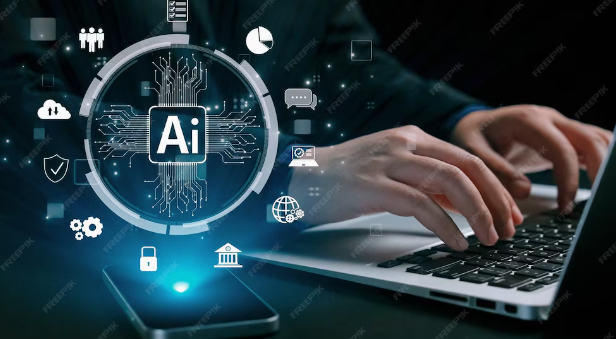
Top AI Trends That Will Dominate the Next 5 Years (2026–2030)
Artificial Intelligence (AI) is entering a transformational phase where its role is expanding beyond simple automation into intelligent decision-making, predictive systems, and fully autonomous digital operations. Over the next five years, AI will reshape industries such as healthcare, finance, e-commerce, education, manufacturing, marketing, and software development. Organizations that understand and adopt emerging AI trends early will gain substantial competitive advantages, while those that delay implementation risk losing efficiency, scalability, and market relevance.
The next generation of AI innovation is centered around AI agents, autonomous workflows, multimodal intelligence, predictive automation, and hyper-personalized digital experiences. These technologies are not experimental concepts; they are rapidly becoming core infrastructure for modern businesses, startups, and enterprise systems.
This comprehensive guide explores the top AI trends expected to dominate the next five years, explaining their applications, impact on industries, and strategic importance for organizations preparing for the AI-driven future.
1. Rise of AI Agents and Autonomous Decision Systems
One of the most significant trends shaping the future of artificial intelligence is the emergence of AI agents—intelligent systems capable of performing complex tasks independently with minimal human intervention. Unlike traditional software that executes predefined instructions, AI agents can analyze data, plan workflows, make decisions, and execute actions dynamically.
Key Capabilities
Goal-based task execution
Context-aware decision-making
Continuous learning from feedback
Integration with multiple software systems
Autonomous workflow completion
Real-World Applications
Automated business operations
Customer service automation
Financial portfolio management
Smart supply chain management
Autonomous IT operations
Within the next five years, organizations will increasingly deploy AI agents to manage operational processes such as procurement, scheduling, analytics reporting, and customer interaction, significantly reducing human workload while improving efficiency.
2. Autonomous Workflows and End-to-End Automation
Automation is evolving from simple rule-based tasks to fully autonomous workflows powered by artificial intelligence. These systems can manage complete operational pipelines, from data collection to decision execution.
Examples of Autonomous Workflows
Marketing campaign optimization
Sales pipeline management
Customer onboarding automation
Invoice processing and accounting
Human resource recruitment screening
Instead of manually managing multiple software tools, businesses will rely on AI-driven workflow engines capable of automatically coordinating applications, triggering tasks, and optimizing outcomes in real time. This transition will dramatically reduce operational costs and increase productivity across industries.
3. Multimodal AI: Understanding Text, Images, Audio, and Video Together
Multimodal AI refers to systems capable of processing and generating multiple types of content simultaneously, including text, images, speech, and video. Over the next five years, multimodal intelligence will become a standard feature across digital platforms.
Key Applications
Visual search engines
Voice-enabled assistants
AI video generation platforms
Medical image analysis systems
Smart education platforms
Businesses will leverage multimodal AI to build richer user experiences, allowing customers to interact with systems using voice commands, images, or natural language queries. This will significantly enhance accessibility, personalization, and customer engagement.
4. Hyper-Personalization Through Predictive Intelligence
Personalization is moving beyond simple recommendation algorithms toward predictive personalization, where AI anticipates user needs before they are explicitly expressed. By analyzing behavioral data, historical interactions, and contextual signals, AI systems can deliver highly tailored experiences.
Industry Applications
Personalized e-commerce product recommendations
Adaptive learning systems in education
Predictive healthcare treatment plans
Financial risk assessment
Customized digital advertising
Hyper-personalization will become a critical differentiator for businesses competing in digital markets, improving customer retention, satisfaction, and conversion rates.
5. Conversational AI Becoming Primary User Interface
Traditional graphical interfaces are gradually being supplemented by conversational AI interfaces, allowing users to interact with systems using natural language rather than navigating menus or forms.
Key Developments
AI-powered customer service assistants
Conversational search engines
Voice-driven productivity tools
Intelligent virtual workplace assistants
Automated helpdesk systems
Within the next five years, conversational AI will become a dominant interface layer across websites, mobile applications, enterprise platforms, and smart devices.
6. AI-Powered Software Development and Autonomous Coding
Artificial intelligence is transforming software development by automating large portions of the coding lifecycle, including code generation, debugging, testing, and optimization.
Key Benefits
Faster development cycles
Reduced engineering costs
Improved code quality
Rapid prototyping capabilities
Automated testing and deployment
AI-assisted development tools will significantly accelerate innovation by enabling smaller teams to build complex applications efficiently.
7. Intelligent Cybersecurity and Threat Prediction
As cyber threats become more sophisticated, AI-driven cybersecurity systems are emerging as essential infrastructure for protecting digital assets. Future security platforms will rely heavily on machine learning models capable of detecting unusual patterns and predicting potential vulnerabilities.
Capabilities
Real-time anomaly detection
Predictive threat intelligence
Automated incident response
Fraud detection systems
Identity verification systems
Organizations adopting AI-powered security frameworks will gain stronger resilience against increasingly advanced cyber threats.
8. AI in Business Intelligence and Predictive Analytics
Business intelligence systems are evolving into predictive decision-support platforms powered by artificial intelligence. These systems analyze large datasets to generate forecasts, identify growth opportunities, and recommend strategic actions.
Key Use Cases
Sales forecasting
Market trend prediction
Customer behavior analytics
Demand planning
Financial performance modeling
AI-driven analytics will allow executives to make faster, data-driven decisions with higher accuracy.
9. Edge AI and Real-Time Processing
Edge AI refers to deploying artificial intelligence directly on devices rather than relying solely on centralized cloud servers. This enables faster processing, reduced latency, and improved privacy.
Applications
Smart cameras and surveillance systems
Autonomous vehicles
Industrial automation sensors
Smart home devices
Healthcare monitoring systems
Edge AI will expand significantly as Internet of Things (IoT) networks continue to grow globally.
10. AI Democratization: No-Code and Low-Code AI Platforms
AI development is becoming accessible to non-technical users through no-code and low-code platforms that allow businesses to build AI models without deep programming expertise.
Impact
Faster innovation cycles
Reduced development costs
Wider adoption among small businesses
Increased experimentation with AI solutions
This democratization will dramatically accelerate AI adoption across industries and regions.
11. AI-Augmented Workforce and Human-AI Collaboration
Rather than replacing human workers entirely, the next phase of artificial intelligence will focus on augmenting human capabilities. AI tools will assist professionals by handling repetitive tasks, generating insights, and improving decision-making efficiency.
Examples
AI-assisted medical diagnosis
AI-driven legal document analysis
Automated research summarization
Marketing content generation
Financial advisory support systems
Human-AI collaboration will become a standard operational model across many industries.
12. Responsible AI, Governance, and Ethical Frameworks
As artificial intelligence adoption accelerates, regulatory frameworks and ethical guidelines will play a crucial role in shaping AI development. Organizations will increasingly implement responsible AI practices, including transparency, fairness, accountability, and data privacy protection.
Key Focus Areas
Bias reduction in AI models
Transparent decision-making systems
Privacy-preserving machine learning
Regulatory compliance frameworks
Ethical AI deployment standards
Companies prioritizing responsible AI practices will gain stronger public trust and regulatory approval.
Industry Impact Over the Next Five Years
Artificial intelligence will influence nearly every sector of the global economy. Major transformations expected include:
Automated customer service ecosystems
Intelligent healthcare diagnostics
Fully automated digital marketing systems
Predictive financial planning tools
Autonomous logistics and supply chains
AI-powered education platforms
Personalized entertainment experiences
Organizations integrating these technologies early will benefit from higher operational efficiency, reduced costs, and stronger competitive positioning.
Strategic Recommendations for Businesses
To prepare for the next phase of AI transformation, businesses should:
Invest in AI literacy and workforce training
Identify automation opportunities within operations
Adopt AI-driven analytics platforms
Experiment with conversational interfaces
Build scalable cloud-based infrastructure
Implement data governance frameworks
Explore AI-driven product innovation
Early adoption combined with strategic implementation will determine long-term competitiveness in AI-driven markets.
Conclusion
Artificial intelligence is transitioning from experimental innovation to essential business infrastructure. Over the next five years, technologies such as AI agents, autonomous workflows, multimodal intelligence, predictive analytics, and conversational interfaces will redefine how organizations operate, interact with customers, and create value. Companies that proactively invest in these emerging trends will position themselves for sustained growth, operational efficiency, and technological leadership.
The future digital economy will be built around intelligent systems capable of autonomous decision-making and continuous learning. Organizations that embrace this transformation today will lead the markets of tomorrow.
How to Integrate an AI Chatbot into Your Website
Artificial intelligence chatbots have rapidly evolved from simple scripted responders into advanced conversational systems capable of




1 Comment
[…] Top AI Trends That Will Dominate the Next 5 Years […]