

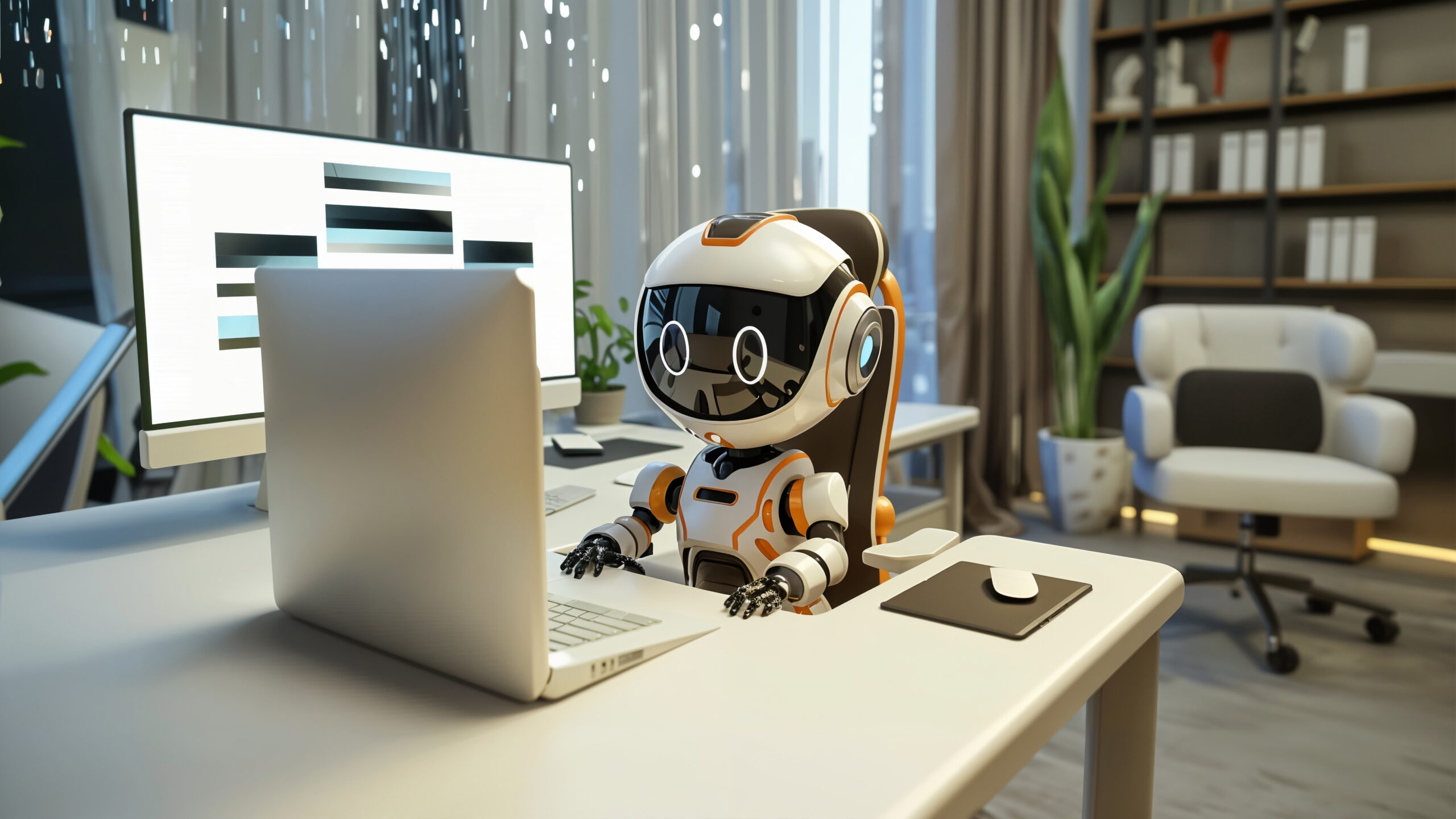
Will AI Replace Jobs? The Truth Tech Companies Won’t Tell You 2026
Artificial intelligence is no longer a futuristic concept. It is embedded in customer service systems, financial platforms, healthcare diagnostics, marketing automation, logistics networks, and software development environments. As AI systems become more capable, one question continues to dominate global discussions:
Technology companies often promote artificial intelligence as a productivity tool that empowers workers. Critics warn about mass unemployment and economic disruption. The reality lies somewhere between these extremes. AI will undoubtedly transform the labor market—but transformation does not automatically mean total replacement.
This comprehensive guide explores the real impact of artificial intelligence on employment, which industries are most vulnerable, which jobs are growing, and how individuals and businesses can prepare strategically for the future of work.
Understanding How AI Replaces Tasks — Not Entire Jobs
One of the biggest misconceptions is that AI replaces entire professions. In most cases, artificial intelligence automates specific tasks, not full roles.
Jobs consist of multiple components:
Repetitive administrative work
Decision-making responsibilities
Communication tasks
Creative problem-solving
Physical activities
AI excels at:
Data processing
Pattern recognition
Repetitive digital tasks
Predictive analytics
Content generation
However, AI struggles with:
Emotional intelligence
Complex negotiation
Ethical judgment
Leadership
Physical dexterity in unpredictable environments
This means AI typically restructures jobs rather than eliminates them entirely.
Historical Perspective: Technology and Employment
Throughout history, major technological advancements have created similar fears:
The Industrial Revolution automated manufacturing.
Computers digitized office work.
The internet transformed communication and commerce.
Automation reshaped factory operations.
Each wave displaced certain roles but also created entirely new industries. Artificial intelligence follows a similar pattern, though its speed and scale are unprecedented.
Jobs Most Likely to Be Automated
Artificial intelligence is most effective in roles involving predictable, repetitive, and data-heavy tasks.
1. Administrative and Data Entry Roles
Routine data processing, scheduling, and form management are increasingly automated by AI-powered systems.
2. Basic Customer Support
Chatbots and automated support platforms handle frequently asked questions, order tracking, and simple troubleshooting.
3. Telemarketing and Call Center Work
AI voice systems can conduct scripted interactions at scale.
4. Basic Accounting and Bookkeeping
AI-driven financial software processes invoices, expenses, and tax calculations.
5. Entry-Level Content Generation
AI tools can generate basic articles, reports, and summaries quickly.
While these roles may shrink, they are not disappearing overnight. Instead, responsibilities are evolving toward oversight and quality control.
Jobs That Are Growing Because of AI
Contrary to fear-driven narratives, artificial intelligence is creating entirely new career paths.
1. AI Engineers and Machine Learning Specialists
Demand for AI developers, data scientists, and model trainers continues to grow.
2. Cybersecurity Professionals
As AI systems expand, protecting digital infrastructure becomes more critical.
3. AI Product Managers
Organizations need experts who understand both technology and market needs.
4. Data Analysts
Interpreting AI-generated insights requires skilled analysts.
5. Human-AI Collaboration Specialists
Professionals who integrate AI tools into workflows are increasingly valuable.
6. Prompt Engineers and AI Trainers
Specialists who optimize AI outputs and fine-tune systems are emerging as key roles.
AI is not just replacing tasks—it is building new employment ecosystems.
Industries Most Affected by AI
Healthcare
AI assists in diagnostics, imaging analysis, and predictive treatment planning. However, doctors and nurses remain essential for patient care and ethical decision-making.
Finance
Algorithmic trading, fraud detection, and automated credit scoring are expanding rapidly. Human financial advisors continue to play strategic roles.
Retail and E-Commerce
Recommendation engines and automated logistics improve efficiency, while human roles shift toward strategy and brand experience.
Manufacturing
Robotics and AI-driven production systems increase efficiency, yet skilled technicians remain necessary for maintenance and oversight.
Marketing
AI automates content creation, ad targeting, and analytics, but strategic creativity remains human-led.
The Truth Tech Companies Don’t Emphasize
Technology companies often highlight AI as a productivity booster without fully addressing potential workforce disruption.
1. Short-Term Displacement Is Real
Certain job categories will shrink significantly in the next five to ten years.
2. Skill Gaps Will Widen
Workers without digital literacy may struggle to transition into AI-augmented roles.
3. Economic Inequality May Increase
High-skilled professionals may benefit disproportionately compared to low-skilled workers.
4. Reskilling Is Essential, Not Optional
Continuous learning becomes mandatory in an AI-driven economy.
Will AI Cause Mass Unemployment?
Most economic analysts predict job transformation rather than total collapse. While some sectors will experience disruption, new industries will continue emerging.
Key reasons mass unemployment is unlikely:
Growing demand for AI oversight
Expansion of digital services
Increased productivity creating new markets
Human preference for human interaction in many fields
Regulatory frameworks limiting fully autonomous systems
The labor market will shift, but not disappear.
Human Skills That AI Cannot Easily Replace
To remain competitive, individuals should strengthen skills that artificial intelligence struggles to replicate:
Critical thinking
Emotional intelligence
Leadership
Creativity
Complex problem-solving
Negotiation
Ethical reasoning
Cross-disciplinary communication
Professionals who combine technical knowledge with strong interpersonal skills will thrive.
How Workers Can Prepare for the AI Era
1. Develop Digital Literacy
Understanding how AI tools function improves adaptability.
2. Learn Data Interpretation
Data-driven decision-making is becoming universal across industries.
3. Upskill in Emerging Technologies
Courses in automation, analytics, and AI integration increase job security.
4. Focus on Adaptability
Flexibility and continuous learning are more valuable than static expertise.
5. Build Hybrid Skills
Combine domain expertise (law, healthcare, finance) with technology knowledge.
How Businesses Should Respond
Organizations must balance automation with responsible workforce management.
Strategic Actions
Invest in employee retraining programs
Integrate AI gradually
Combine automation with human oversight
Prioritize ethical AI deployment
Develop transparent communication strategies
Companies that handle AI adoption responsibly will maintain trust and productivity.
The Economic Impact of AI
Artificial intelligence contributes to:
Increased operational efficiency
Reduced operational costs
Faster innovation cycles
Enhanced customer experiences
Scalable digital products
While job displacement may occur in certain areas, overall economic productivity is expected to grow.
The Rise of Human-AI Collaboration
The future workplace will likely involve collaboration between humans and AI systems rather than direct competition.
Examples:
Doctors using AI diagnostic tools
Lawyers using AI research assistants
Marketers using AI analytics platforms
Engineers using AI design optimization tools
Human judgment combined with AI efficiency creates stronger outcomes than either alone.
Ethical and Regulatory Considerations
Governments worldwide are developing AI governance frameworks to ensure:
Responsible deployment
Bias reduction
Data privacy protection
Transparency in decision-making
Fair labor transitions
Regulation may slow fully autonomous replacement of certain roles.
Psychological Impact and Public Perception
Public fear around job loss is amplified by media narratives. However, technological transitions historically include:
Initial disruption
Gradual adaptation
New job creation
Productivity expansion
Understanding this pattern helps reduce panic-driven conclusions.
The Next 10 Years: What to Expect
Between 2026 and 2035, expect:
Increased automation in repetitive knowledge work
Growth in AI-assisted professions
Expansion of digital entrepreneurship
More freelance and remote AI-related roles
Continuous upskilling becoming standard practice
The workforce will evolve significantly, but human labor will remain central.
Balanced Conclusion
So, will AI replace jobs?
Yes—some jobs and tasks will be automated.
No—human work will not disappear entirely.
Artificial intelligence represents one of the most significant technological shifts in modern history. It will reshape industries, redefine job descriptions, and demand new skills. However, it will also create opportunities for innovation, entrepreneurship, and productivity growth.
The real risk is not AI itself—it is failing to adapt. Workers who embrace continuous learning and organizations that implement AI responsibly will thrive in the evolving digital economy.
The future of work is not humans versus AI. It is humans working with AI.

Top AI Trends That Will Dominate the Next 5 Years
Artificial Intelligence (AI) is entering a transformational phase where its role is expanding beyond simple automation into







1 Comment
[…] Will AI Replace Jobs? […]